 The Archive d'etoiles' division:
Presents!
Charlemagne: A-live @ the archive!
1. Aluccius, the Spanish Celtic prince!
Forget what you learned about the origins of the 'Father' of Europe and join us on a internet-centric, Catholic validation of ourselves as an art people, putting all these extra meanings into art so that they can be pulled out occasionally and shown to the public in a way that helps to create 'as-was' integrity in the historical record.
We cordially welcome all religious people, republic members, scholars, and royals that are interested in history and ask that they join us to make history perfect up until 1190 AD. We are looking forward to your participation!
It depends on how you value history. Charlemagne has 500 million descendants and you might be one of them. Following each step can allow you to visit Europe, Africa, and Asia and know that one of your ancestors was there at some point. Alternatively, there can be a lot of satisfaction in putting history right. The history of Royalty, Charlemagne included, is rife with records changing or disappearing. We will be looking backwards to the oldest historical copies of works that may have changed after publication for imperial, monarchical, or war purposes, creating some modern anomalies that could stand to be rectified once we have applied our records or together discovered what changes were needed. We appeal to the Royalty, old record custodians and the Irish that may have access to unadulterated works here because our goal was to be perfect without intelligence up thru 1190AD for all those using the archive in the future. With you, we can get there!
Aluccius, the Spanish Celtic Prince
For millenia, the beautiful love story between Aluccius and his intended bride has captivated audiences and artists alike.
According to the Roman historian Livy and translator (1798) Baker:
"There was then brought to him by the soldiers, as a captive, a maiden of such exquisite beauty, that wherever she turned, she attracted the eyes of all. Scipio, inquiring her country and her parents, found, among other particulars, that she was betrothed to a prince of the Celtiberians, named Alluccius. He immediately sent for her parents and betrothed lover; and on the arrival of the latter, who was passionately fond of her, addressed him in language more tender than he used to the parents:
b
'Young man,' said he, 'I address myself to a young man, that there may be the less restraint in our conversation. When your betrothed was brought to me by our soldiers, and I learned how dear she was to you, her beauty making the story credible, as I should myself, if my time were not engaged by the state, wish that my love, provided it were honorable, should be pardoned, so I favor yours, as far as I can. Your betrothed has been preserved for you with the same purity as if she had been under the roof of her own parents or yours. She is kept inviolate, that she may be presented to you a gift worthy of you and of me. In return for this favor, I ask only this: be a friend to the Roman people; and if you believe me to be a good man, such as these nations formerly experienced my father and my uncle to be, know that there are many like us in the Roman state, and that no nation can be named, which you would less wish to have for an enemy, or more for a friend.'
The youth, overwhelmed at once with joy and bashfulness, holding Scipio's right hand, invoked all the gods to compensate him, since he was far from being able to make a return suitable to his feelings and Scipio's merits..." He also spent the dowry, paying for 1400 horse calvary to help Scipio fight Hannibal!
Rome was once a Republic and Charlemagne's Ancestor, a republican in Spain
There is a legend that when Louis 1 created Albigensian Templars and they began to create castles, like the Italian Albigensians that built on top of Byzantine sites, the Spanish Albigensians built on top of Roman Republic sites, intending to preserve what remained in Spain.
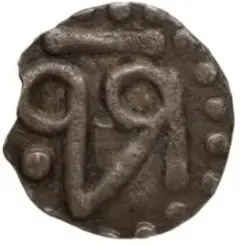
According to Pepin the Short's coin, Aluccius was allowed to fight for Scipio because he had famously lost to Carthage while defending his mother's city of Cadiz [Cadiz/Gadir is the dot beneath the backwards P in the picture of the coin at the bottom of the page].
It is a good theory, and there was evidence of even more interaction between Scipio and Aluccius after this in the local Roman Republic. Someone called Lupus or Lopes 1 invented Lupercal, a type of statue garden that trained and educated young men. Some people say that Scipio's relatives were the original Lupus while Aluccius' relatives were Lupus 2. Yet others say, the local Lupercal for all the maps of the known world were in a statue garden in St. Michael's cave in Gibraltar until they were removed. Join us as we look through the clues to see if we can recover any of this ancient information about Africa and possibly the Americas.
The paintings loaded in the Provenanced viewer above can be manipulated and drawn upon in order to seek clues or a backstory related to ancient times or Christian life.
While you are free to do this on your own, you may consider buying a party pass for only $25 one-time in your life. With it, you can log in and access our forum that is full of like-minded individuals that are adding and learning more information about this exhibit all the time. You can also help us reboot some of the older stories int new works that can have other new information that blends with it to make a contemporary artist's work truly extraordinary. Give in to becoming a patron of the arts, it will feel very nice!
Woven into the Charlemagne family for millenia
How the reverse, obverse of Pepin the Short's coin shows that the story of Aluccius was important for his family to remember. Look at the south of Spain near Gibraltar in times. Aluccius was local or was helping local Celtici fight off the Carthaginians near his mother's city of Cadiz/Gadir before he lost. What else can be gleaned from his graphic representation?
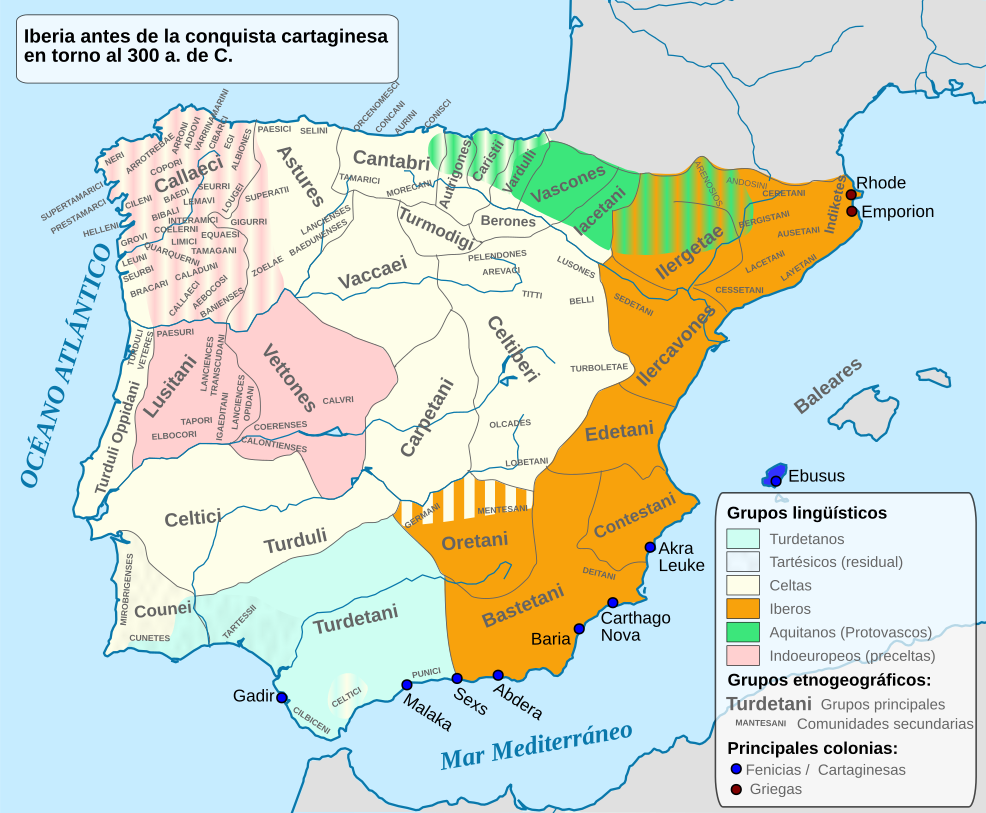 Map courtesy of: Iberia 300BC-en.svg: Alcides Pinto derivative work: Rowanwindwhistler - This file was derived from: Iberia 300BC-en.svg : Alcides Pinto,